
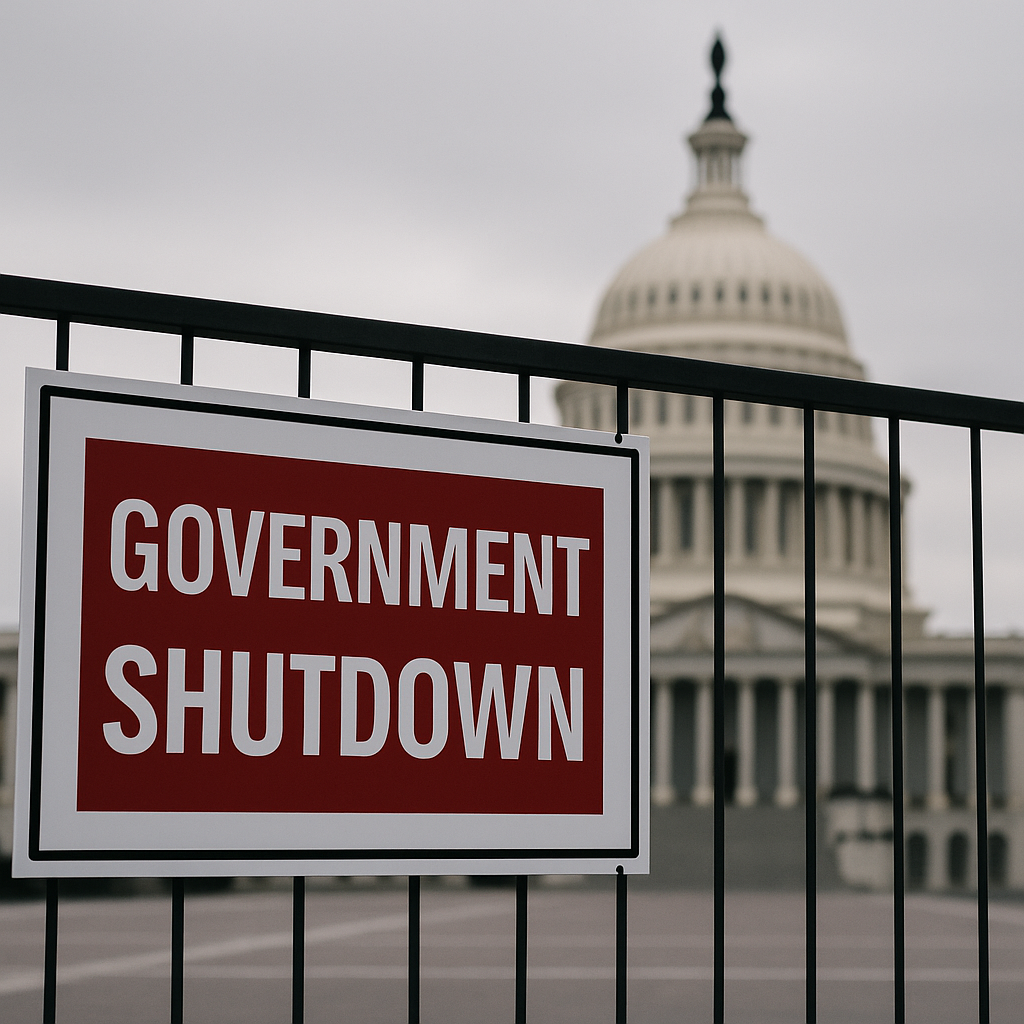
A U.S. government shutdown is one of the most disruptive political events in the world. It affects government workers, global markets, travel, and even international students waiting for visas.
This blog explains everything in a simple way — what a shutdown is, how it works, the consequences, the history, and the most important facts you should know.
What Is a Government Shutdown?
A U.S. government shutdown happens when Congress fails to approve the yearly federal budget.
If the budget is not passed, the government legally cannot spend money, so many departments must stop or reduce their work.
Main Point:
The government stops functioning normally because it has no approved funding.
How a Government Shutdown Works
- Congress misses the deadline for passing funding bills
- Funding stops for many government agencies
- Essential workers continue working without salary
- Non-essential workers are sent home
- Services like visas, passports, parks, museums, research slow down
- Shutdown ends only when Congress finally agrees on a budget
This process affects millions of people across the U.S.
Who Gets Affected?
- Military members
- TSA airport officers
- Border patrol agents
- Federal doctors
- NASA researchers
- IRS workers
- National Park employees
- Travelers needing passports or visas
Even small businesses that depend on government payments face delays.
Consequences of a Shutdown
- Millions of workers temporarily lose pay
- Airports experience long lines and slow processing
- National parks and museums close
- Visa and passport approvals slow down
- Stock markets become unstable
- Loan approvals and tax processes are delayed
- Billions of dollars are lost from the U.S. economy
Shutdowns create a chain reaction that hurts both America and the world.
History of Shutdowns (Quick Timeline)
Shutdowns became common after 1976.
- 1995–96 Shutdown — 21 days
- 2013 Shutdown — 16 days
- 2018–2019 Shutdown — 35 days
- 2025 Shutdown — 43 days (longest ever)
Total shutdowns so far: More than 20
Each shutdown happened because of disagreements between political parties over spending, healthcare, immigration, or border security.
Why Do Shutdowns Happen?
- Fights between Democrats and Republicans
- Disagreements over immigration, taxes, healthcare, defense
- Congress leadership fails to gather enough votes
- Shutdowns are used as leverage to force negotiations
In simple terms:
If Congress doesn’t agree, the government doesn’t run.
Important & Unknown Facts
- The U.S. is the only major country where government shutdowns happen
- Members of Congress continue to get paid during shutdowns
- Air travel becomes risky if shutdowns last too long
- NASA loses millions per day because research stops
- Visa and passport delays affect international students and travelers
- Shutdowns affect worldwide stock markets, including India and Asia
Shutdowns are both political and economic events with global impact.
Impact on Other Countries
A U.S. shutdown affects countries around the world:
- Indian IT companies face slower U.S. contracts
- Asian stock markets fall
- Oil prices fluctuate
- Student visas get delayed
- Imports and exports slow down
A long shutdown can shake the global economy.
Conclusion
A U.S. government shutdown is more than a political argument — it is a major event with real consequences.
It affects workers, travelers, markets, global trade, and everyday life.
Understanding how it works helps you stay informed about world news and global financial changes.